

Shelves can quietly make or break a room. Too empty, and they feel forgotten. Too crowded, and they turn into visual noise. The sweet spot is somewhere in between—where every item feels intentional, balanced, and easy on the eyes.
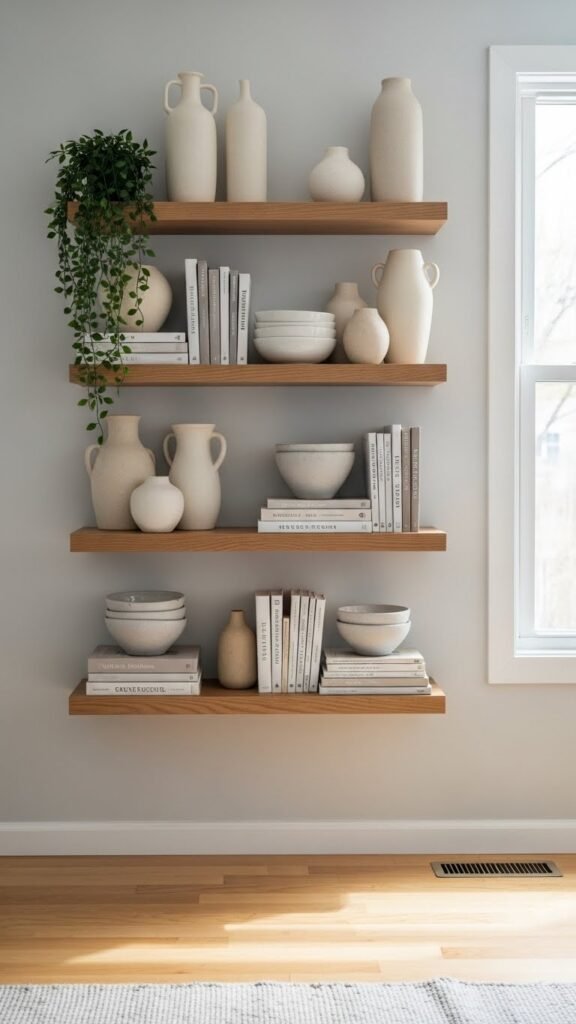
Whether you’re styling built-ins, floating shelves, or open kitchen shelving, this guide will help you decorate with confidence—no design degree required.
Start With a Clean Slate
Before adding anything new, clear your shelves completely. This step feels simple, but it’s powerful.
Starting fresh helps you:
- See the shelf size and spacing clearly
- Avoid forcing items that don’t belong
- Build a more intentional look
Once everything is off, give the shelves a quick wipe. Clean shelves instantly feel more styled, even before décor goes back on.
Quick tip: Don’t try to decorate all shelves at once. Work one shelf at a time to avoid overwhelm.
Build Your Foundation With Books and Storage
Think of books and baskets as the “anchors” of shelf styling. They ground the look and give you structure to build around.
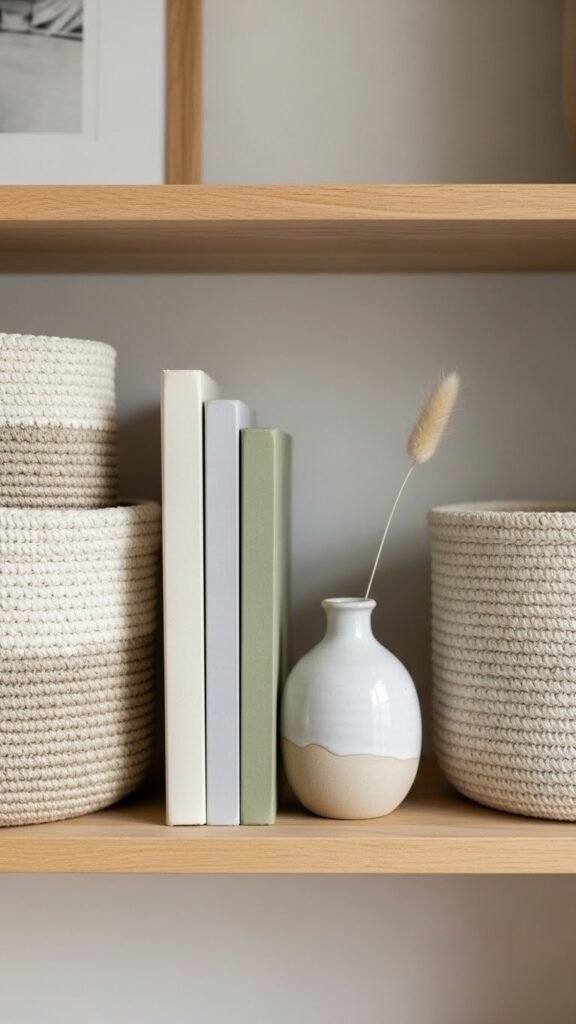
Ways to use them:
- Stack books horizontally to create platforms
- Stand books vertically to add height
- Use baskets or boxes to hide small clutter
Stick to a loose color theme for book spines. You don’t need to cover them—just spread similar tones throughout the shelf for visual calm.
Mix Heights, Shapes, and Textures
The secret to shelves that feel styled (not stiff) is variation.
Aim for a mix of:
- Tall items: vases, candlesticks, framed art
- Medium items: bowls, planters, sculptures
- Small items: beads, boxes, decorative objects
Also mix textures:
- Smooth ceramics
- Rough wood
- Soft fabric
- Natural greenery
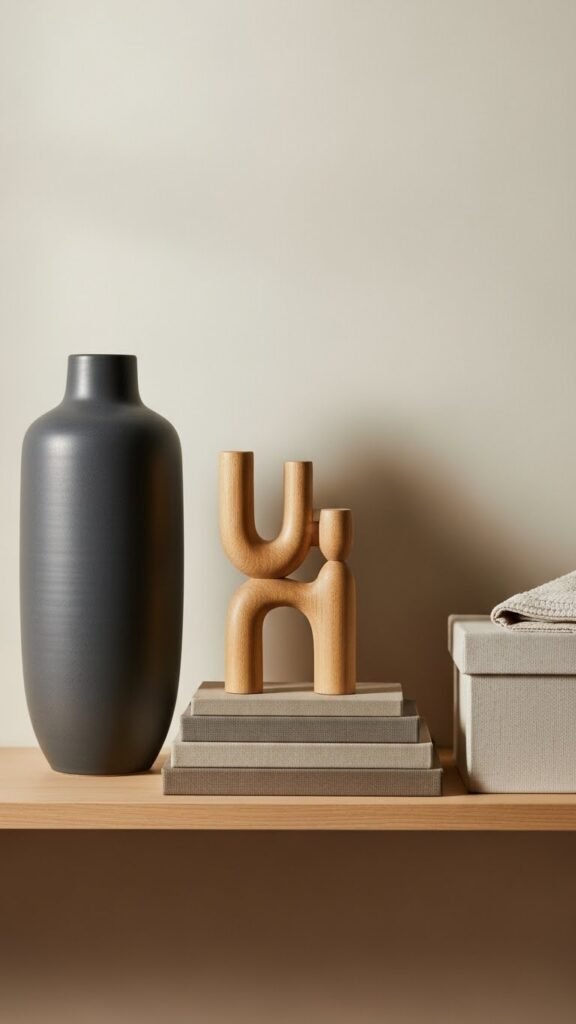
When everything is the same height or material, shelves fall flat. Contrast brings them to life.
Use the Rule of Three (But Don’t Stress It)
Designers often talk about the “rule of three” because odd numbers feel more natural to the eye.
Try grouping items in:
- Sets of three
- Sets of five
- Loose clusters with varied heights
For example:
- A small plant
- A short stack of books
- A decorative object
That’s a balanced trio.
Important: This is a guideline, not a law. If a shelf looks right with two items, trust your eye.
Add Breathing Room
One of the most common shelf-styling mistakes is filling every inch.
White space matters.
Leave some areas empty so:
- The eye can rest
- Special pieces stand out
- Shelves feel calm, not crowded
[Image Prompt] Minimalist shelving with a few carefully spaced décor pieces, soft shadows, and plenty of open space between items.
If you feel unsure, remove one item. Shelves almost always look better with less.
Layer Art and Personal Pieces
Shelves shouldn’t look like a store display. They should feel like you.
Add personality with:
- Framed photos
- Leaning art instead of wall-hung art
- Travel finds or meaningful keepsakes
Layer artwork behind objects for depth. Slight overlaps make shelves feel collected over time, not staged all at once.
Step Back and Adjust
Once everything is styled, step back—literally.
Look for:
- Even visual weight across shelves
- Balanced colors from left to right
- No single shelf feeling heavier than the others
Take a photo on your phone. You’ll spot imbalances faster on a screen than in real life.
Easy fix ideas:
- Swap one item to another shelf
- Rotate an object for a new angle
- Remove one piece entirely
Keep It Flexible
Shelf styling isn’t permanent—and that’s the fun part.
Refresh your shelves by:
- Swapping décor seasonally
- Rotating books and art
- Adding one new piece instead of restyling everything
This keeps your space feeling fresh without buying a lot.
Final Takeaway
Decorating shelves with style and balance isn’t about perfection. It’s about intention, contrast, and knowing when to stop. Start simple, layer slowly, and trust your eye.
Save this guide for later and come back whenever your shelves need a refresh.

Leave a Reply