

A cluttered pantry can turn even the simplest meal prep into a daily frustration. Boxes topple over, jars hide in the back, and you end up buying duplicates because you can’t see what you already have. The good news? With a smart system and a little planning, your pantry shelves can hold more and look calm and inviting.
[Image Prompt] A bright, well-organized pantry with neatly arranged shelves, clear storage containers, labeled jars, and baskets filled with dry goods, photographed in natural light with a clean, minimalist style.
This guide walks you through practical, realistic steps to organize pantry shelves for maximum storage—without making it feel complicated or overwhelming.
Start by Emptying and Editing
Before you buy organizers or rearrange shelves, clear everything out. Yes, everything.
This step helps you:
- See how much space you truly have
- Spot expired or unused items
- Group similar products together
Lay items out on a table or counter and sort into simple categories:
- Baking supplies
- Snacks
- Breakfast items
- Canned goods
- Grains and dry staples
Toss anything expired and set aside items you rarely use. A lighter pantry is easier to organize and easier to maintain.
Measure Shelves and Adjust Heights
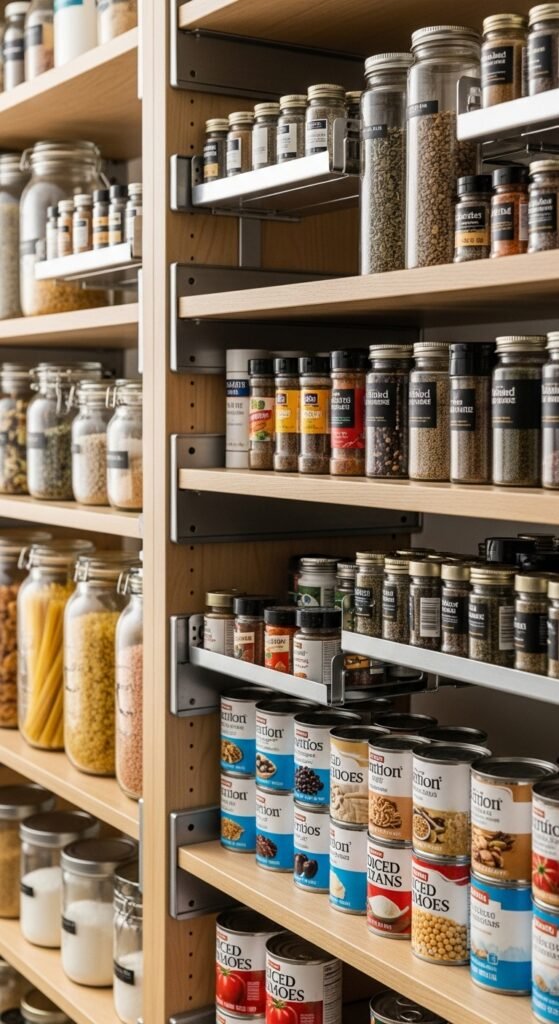
Pantry shelves often waste vertical space. Tall items leave empty air above them, while short items get buried.
Adjustable shelves are your best friend. Aim for:
- Short spacing for cans and jars
- Medium spacing for boxes and containers
- Tall sections for bulk items or appliances
If shelves are fixed, use risers to create levels. This instantly doubles visibility without adding clutter.
Use Clear Containers to Maximize Space
Clear containers are one of the biggest pantry game-changers. They help you see what you have at a glance and reduce wasted space from bulky packaging.
Benefits of using containers:
- Stackable shapes save room
- Uniform sizes keep shelves tidy
- Contents stay fresh longer
Transfer items like rice, pasta, cereal, flour, and snacks into airtight containers. Square or rectangular containers fit together better than round ones.
Tip: Keep labels simple and consistent. Clear labels on the front help everyone in the household know where things belong.
Group Items by Zone, Not Just Category
Instead of only grouping by food type, think in terms of how you use items.
Create zones such as:
- Breakfast zone: cereal, oats, spreads, and bowls
- Baking zone: flour, sugar, measuring tools
- Snack zone: grab-and-go items at eye level
- Meal prep zone: grains, sauces, and staples
This approach saves time and keeps frequently used items within easy reach.
Add Bins and Baskets for Small Items
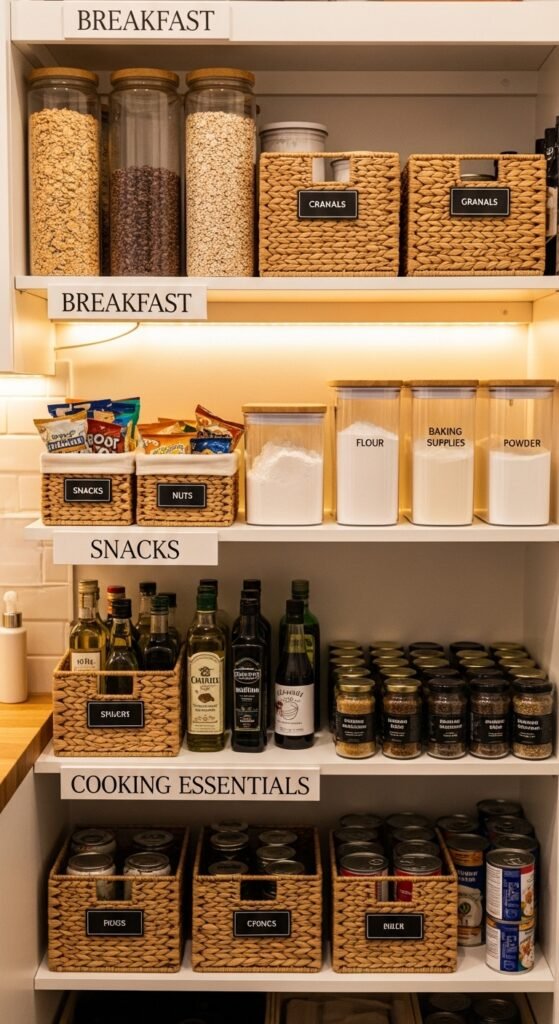
Small packages and loose items are often the biggest source of pantry chaos. Bins and baskets help corral them into tidy groups.
Use baskets for:
- Snack bars and small packets
- Baking tools
- Backstock items
Pull-out bins work especially well on deep shelves. Instead of digging, you can slide the whole bin forward and grab what you need.
Wire baskets are great for visibility, while solid bins offer a cleaner look. Choose what fits your style and pantry size.
Take Advantage of Door and Vertical Space
Don’t ignore the pantry door or side walls. These areas are perfect for extra storage.
Ideas that work well:
- Over-the-door racks for spices or wraps
- Slim shelves for small jars
- Hooks for reusable bags or lightweight tools
Vertical storage keeps frequently used items visible and frees up shelf space for larger goods.
[Image Prompt] An open pantry door featuring slim door-mounted racks holding spices and small jars, with a tidy and functional layout.
Keep Everyday Items at Eye Level
The most-used items should live where your eyes naturally land. This makes daily routines smoother and keeps the pantry from falling into disarray.
Place:
- Daily snacks and staples at eye level
- Heavy items on lower shelves
- Rarely used items up high
This simple adjustment makes a big difference in how functional your pantry feels.
Create a Simple Maintenance Habit
An organized pantry only stays that way with light upkeep. The goal isn’t perfection—it’s consistency.
Try these habits:
- Do a quick check once a week
- Return items to their zones after shopping
- Wipe shelves monthly
When everything has a clear home, tidying takes minutes instead of hours.
Final Takeaway
Organizing pantry shelves for maximum storage isn’t about buying more—it’s about using space smarter. Clear containers, thoughtful zones, and simple habits turn even a small pantry into an efficient, stress-free space.
Save this guide for later, and tackle one shelf at a time. Your future self will thank you every time you open the pantry door.

Leave a Reply