

There’s something quietly magical about a terrarium. It’s a tiny world under glass—lush, calm, and completely yours. Whether you live in a small apartment or a spacious home, DIY terrariums let you bring nature indoors without needing a green thumb or a big commitment.
[Image Prompt] A bright windowsill with a clear glass terrarium filled with layered pebbles, moss, and small green plants, sunlight streaming through the glass, cozy indoor atmosphere.
If you love décor that feels warm, natural, and personal, this project is for you. Let’s break it down step by step so you can create a terrarium that looks store-bought but feels deeply handmade.
What Is a Terrarium (and Why They’re So Popular)?
A terrarium is essentially a mini indoor garden housed in a glass container. Some are sealed, some are open, but all of them are designed to be low-maintenance and decorative.
Why people love them:
- They add greenery without taking up much space
- They work well in apartments, offices, and shelves
- They’re budget-friendly and customizable
- They make thoughtful handmade gifts
Terrariums fit perfectly with Pinterest-style interiors—simple, organic, and calming.
Choosing the Right Container
Your container sets the tone for the entire terrarium. Almost any clear glass vessel can work as long as light can get through.
Popular options include:
- Glass jars or apothecary jars
- Fish bowls
- Vases
- Hanging glass globes
Open containers are easier for beginners because they reduce moisture buildup. Closed containers are better for humidity-loving plants but require a bit more balance.
Tip: Always choose clear glass. Colored or frosted glass blocks light and makes plant care harder.
Gather Your Terrarium Supplies
Before you start layering, gather everything you’ll need. Most items are affordable and easy to find at garden centers or craft stores.
You’ll need:
- Small stones or pebbles (for drainage)
- Activated charcoal (keeps things fresh)
- Potting soil (light, well-draining)
- Small plants
- Moss (optional but highly recommended)
- A spoon or small scoop
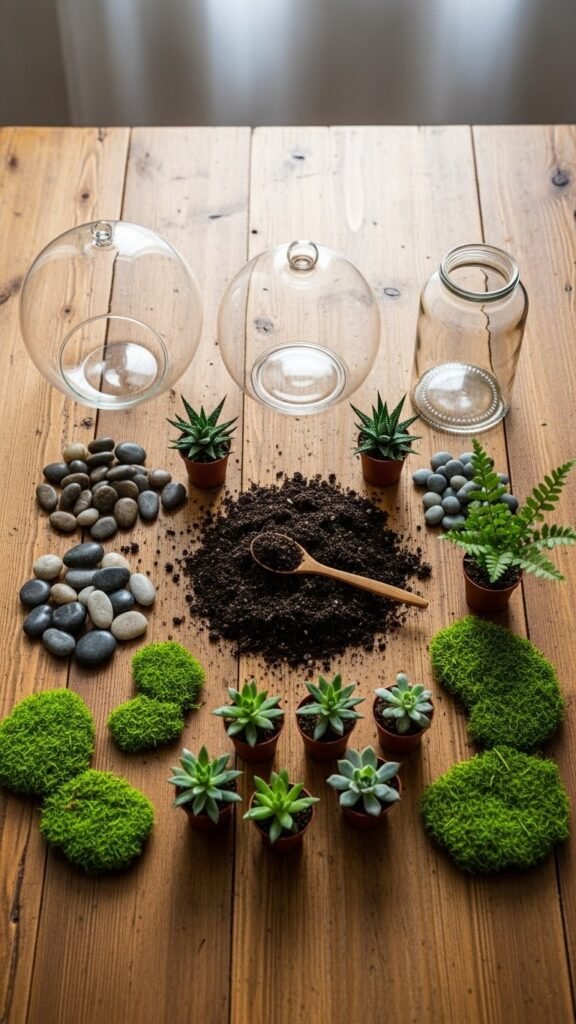
Activated charcoal is key. It helps prevent odors and keeps the terrarium looking clean over time.
Best Plants for DIY Terrariums
Not all plants enjoy living in a glass container. The best terrarium plants grow slowly and stay compact.
Great beginner-friendly choices:
- Moss
- Fittonia (nerve plant)
- Mini ferns
- Pilea
- Peperomia
Avoid fast-growing plants or anything that needs direct sun. Terrariums prefer bright, indirect light.
Pro tip: Mix textures. Pair leafy plants with moss for a fuller, more natural look.
How to Layer Your Terrarium (Step-by-Step)
This is where the magic happens. Layering is simple, but order matters.
- Drainage layer
Add a layer of pebbles at the bottom. This prevents roots from sitting in excess moisture. - Charcoal layer
Sprinkle a thin layer of activated charcoal over the stones. - Soil layer
Add enough soil to support the roots of your plants without crowding them.
[Image Prompt] Close-up of hands layering a terrarium with pebbles, charcoal, and soil inside a clear glass bowl, clean and minimal aesthetic.
- Planting
Gently remove plants from their pots, loosen the roots, and nestle them into the soil. - Moss and finishing touches
Add moss around plants to cover bare soil and give a polished look.
Styling Tips for a Pinterest-Worthy Look
A terrarium should feel intentional, not cluttered. Less really is more.
Styling ideas:
- Stick to one color palette (all green, soft neutrals)
- Use odd numbers of plants for balance
- Leave breathing room—crowding leads to overgrowth
- Clean the glass before displaying
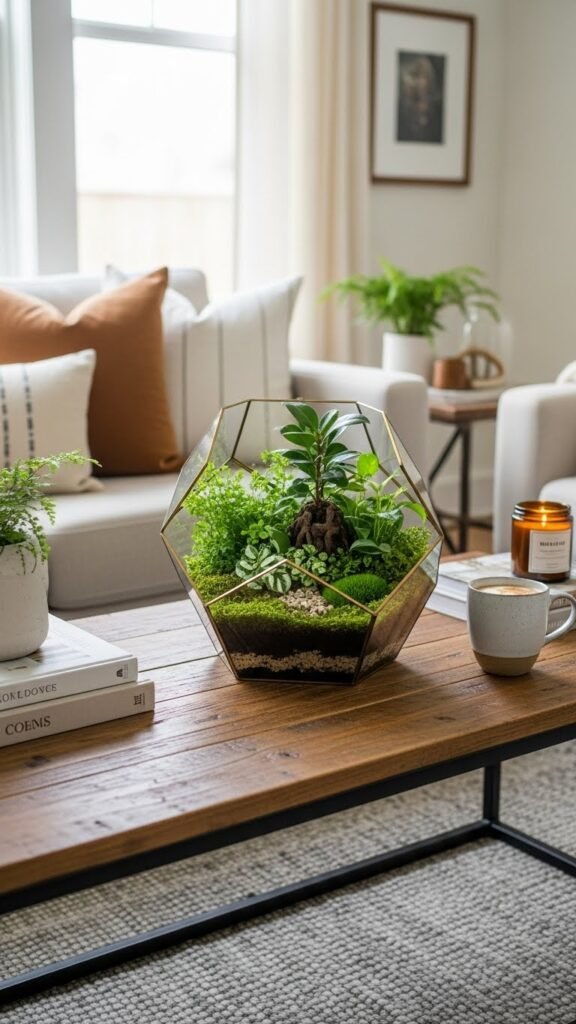
Terrariums look especially good on shelves, side tables, desks, or window ledges.
Easy Terrarium Care & Maintenance
Terrariums are low effort, not no effort. A little care goes a long way.
Basic care tips:
- Water lightly—overwatering is the biggest mistake
- Wipe condensation if it builds up too much
- Trim plants occasionally to keep shape
- Rotate the container for even light
If leaves turn yellow or mushy, it usually means too much moisture.
Why DIY Terrariums Make Great Gifts
Terrariums are thoughtful, handmade, and long-lasting. You can customize them for different styles—minimal, boho, modern, or rustic.
They’re perfect for:
- Housewarmings
- Birthdays
- Desk décor
- Seasonal refreshes
Plus, they feel personal without being complicated.
Final Thoughts
DIY terrariums are one of those projects that look impressive but feel relaxing to make. They bring calm, texture, and life into your space—no renovation required.
Once you make one, it’s hard to stop.
Save this guide for later and try creating your own little indoor world this weekend.

Leave a Reply