

The entryway sets the tone for your entire home. It’s the first thing you see when you walk in and the last thing you pass on the way out. When it’s messy, everything feels more stressful. When it’s organized, life feels smoother.
The good news? You don’t need a huge space or a full renovation to make it work beautifully.
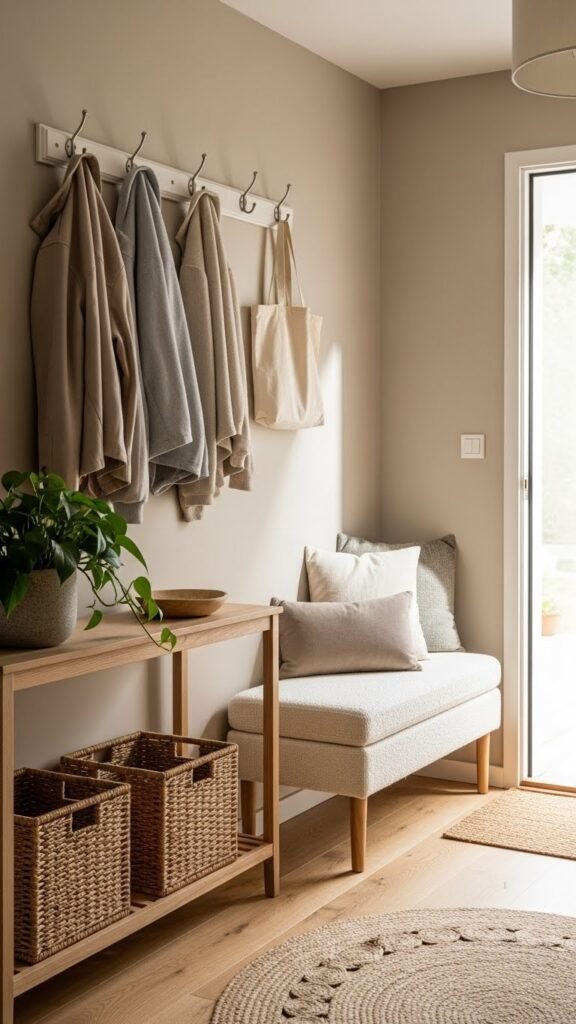
Below is a simple, step-by-step guide to creating an entryway that stays clutter-free and actually supports your daily routine.
Start by Defining the Purpose of Your Entryway
Before buying bins or hooks, pause and observe how the space is really used.
Ask yourself:
- Who uses this entryway most?
- What items land here every day?
- What causes clutter to pile up?
Common entryway clutter includes:
- Shoes kicked off in a hurry
- Bags dropped on the floor
- Keys and mail scattered everywhere
Once you identify the problem areas, the solutions become much clearer. The goal isn’t perfection. It’s function that fits real life.
Create a Drop Zone for Everyday Essentials
Every organized entryway needs a dedicated drop zone. This is where daily items land the moment you walk in.
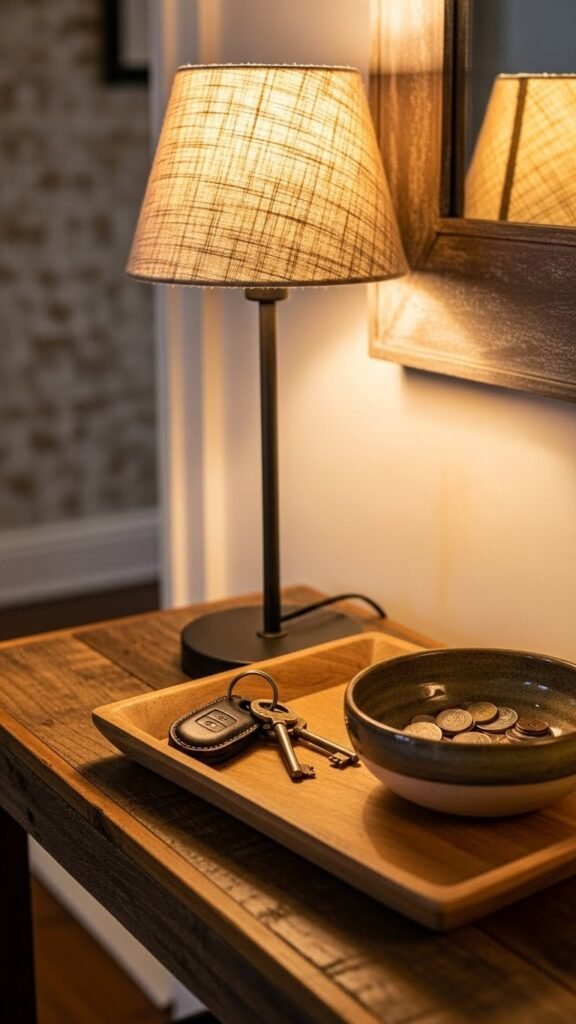
Essentials to include:
- A key tray or bowl
- A small surface for mail
- A charging spot for phones or earbuds
Keep it simple. If the drop zone is too cluttered, it won’t get used. One tray is better than five containers competing for attention.
Tip: Place the drop zone at arm level so it’s easy to use without thinking.
Use Wall Space to Free Up the Floor
Vertical storage is the secret weapon of small or busy entryways.
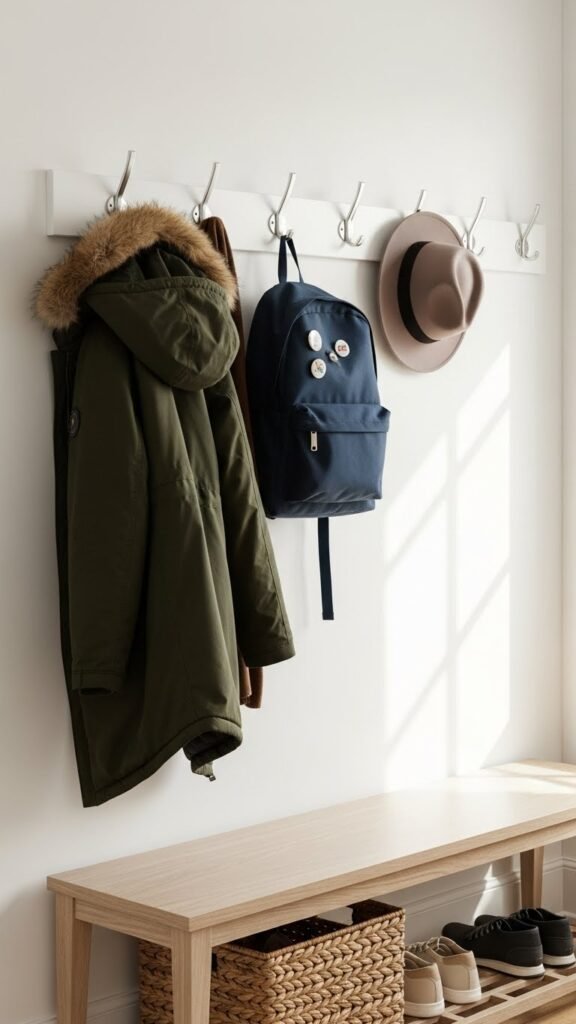
Smart wall solutions:
- Hooks for coats and bags
- Peg rails for flexible storage
- Floating shelves for décor plus function
Hang hooks at different heights if kids use the space. This encourages everyone to hang items instead of tossing them on the floor.
The more you lift off the ground, the more open and calm the space feels.
Contain Shoes Before They Take Over
Shoes are often the biggest source of entryway chaos. The key is containment, not elimination.
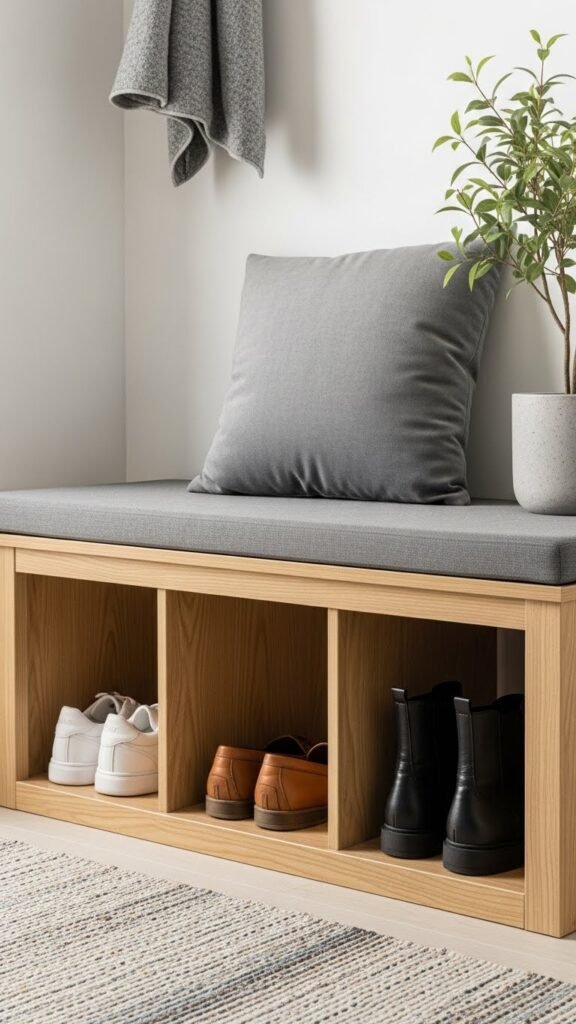
Effective shoe solutions:
- Shoe benches with hidden storage
- Slim shoe cabinets
- Baskets for everyday pairs
Limit the number of shoes allowed in the entryway. Seasonal or special-occasion shoes should live elsewhere. This simple rule prevents instant clutter.
Add Seating for Function and Comfort
A place to sit changes everything. It makes putting on shoes easier and encourages people to pause instead of dropping items randomly.
Options that work well:
- Storage benches
- Small stools
- Built-in seating if space allows
Choose seating that does double duty, like benches with hidden compartments or baskets underneath. Function always comes first in an entryway.
Control Paper Clutter Before It Spreads
Mail, flyers, and school papers can quickly overwhelm a space.
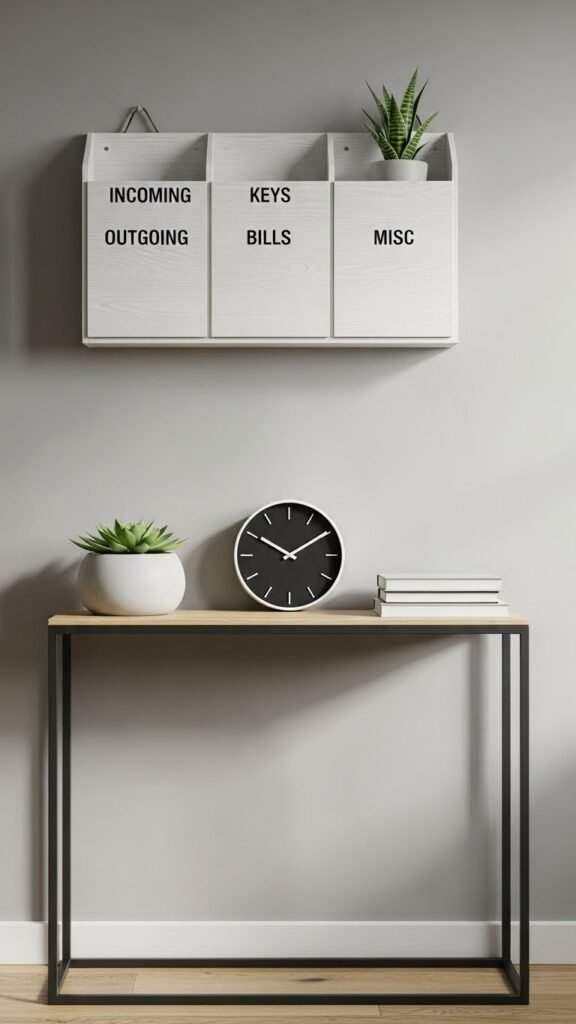
Simple paper control ideas:
- Wall-mounted mail sorters
- One basket labeled “To Sort”
- A weekly paper clean-out routine
The trick is not letting paper linger. If it stays longer than a day or two, it turns into clutter fast.
Style with Purpose, Not Excess
Decor matters, but in an entryway, less is more.
Use:
- A mirror to reflect light and make the space feel bigger
- One piece of wall art or a framed print
- Natural textures like wood, woven baskets, or greenery
Every decorative item should still leave room for function. If décor blocks storage or surfaces, it’s working against you.
Create Simple Systems Everyone Can Follow
The most organized entryways rely on easy habits, not constant tidying.
Make it foolproof:
- One hook per person
- One basket per category
- Clear “homes” for everyday items
When systems are simple, everyone uses them. When they’re complicated, clutter creeps back in.
Final Thoughts: Small Changes, Big Impact
An organized entryway doesn’t just look good. It saves time, reduces stress, and makes coming home feel better every single day.
You don’t need to do everything at once. Start with one small change. Add a hook. Introduce a basket. Clear one surface.
Those little shifts add up fast.
Save this guide for later and come back whenever your entryway needs a reset.
Leave a Reply